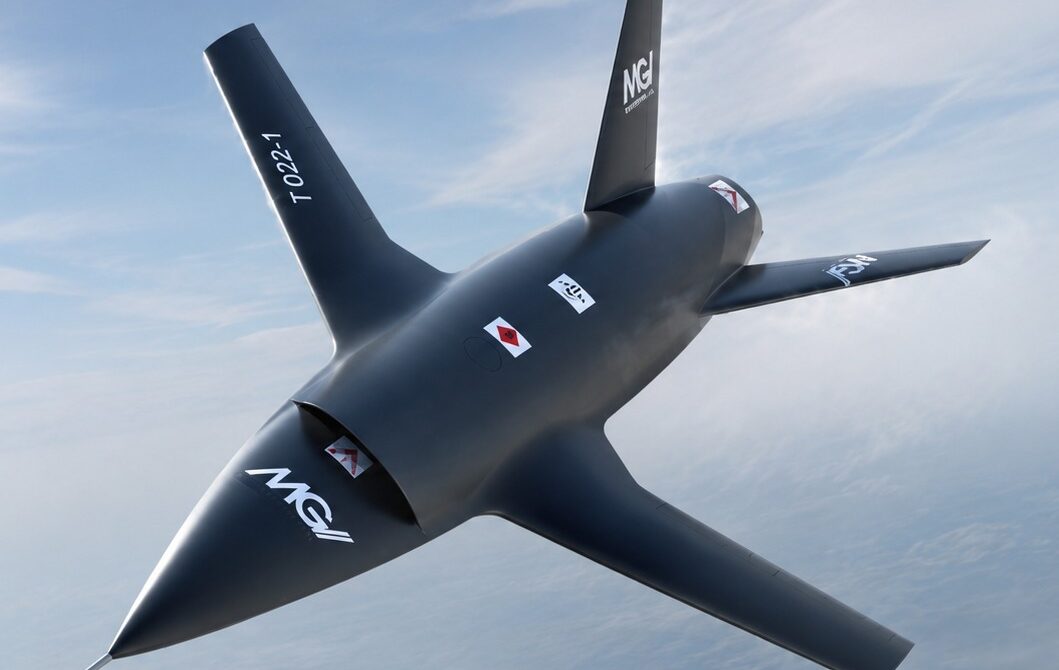
The UK has moved closer to a future hybrid manned-unmanned fleet with the introduction of another autonomous collaborative platform built domestically.
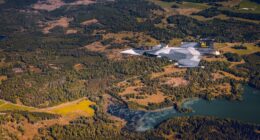
Designed by MGI Engineering, the T-022 Vortex is an autonomous combat aircraft designed to operate alongside crewed fighters as a new class of aerial platform. The company said it aims to “redefine what affordable air power looks like.”
The drone is designed to cover more than 4,000 kilometers (2,485 miles) and carry significant payloads, with a maximum take-off weight of 3,500 kilograms (7,716 pounds).
It also reportedly flies as fast as crewed jets, reaching a maximum speed of 1,050 kilometers per hour (652 miles per hour).
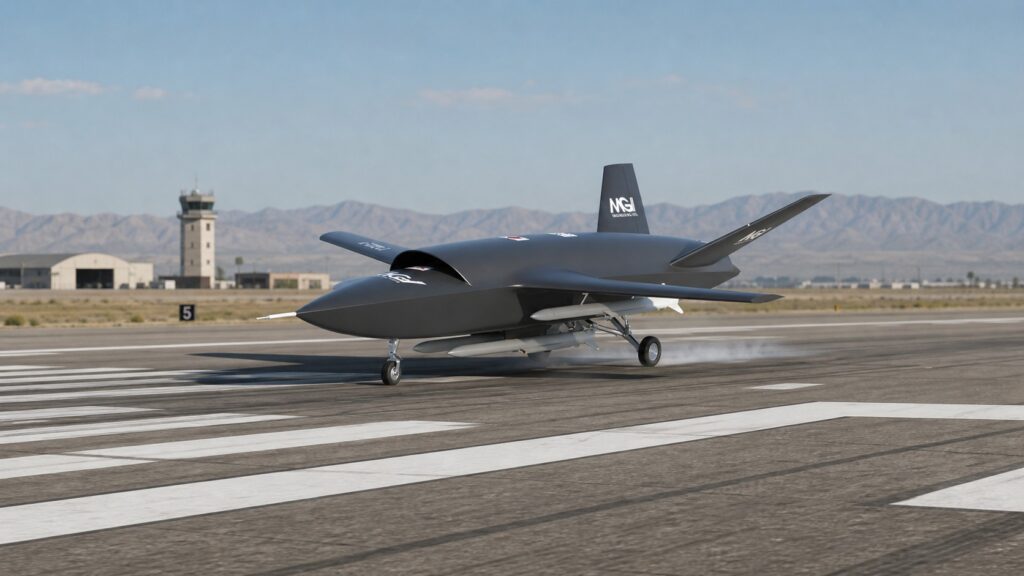
Powered by a Rolls-Royce Orpheus engine producing up to 16 kilonewtons of thrust, T-022 can carry up to 1,000 kilograms (2,205 pounds) of weapons or mission equipment across four internal and external payload stations.
Built for Modern Demands
MGI designed T-022 specifically for manned-unmanned teaming (MUM-T), allowing pilots aboard aircraft such as the Typhoon or F-35 to control multiple autonomous Vortex units.
Operating as autonomous wingmen, the drone can share sensor data, adapt to changing mission conditions, and execute coordinated tasks without requiring human input for every decision.
The company said T-022 is also built to continue operating in signal-denied environments, allowing it to function independently in contested airspace.
MGI envisions the aircraft supporting missions ranging from intelligence gathering and electronic warfare to deep-strike operations, with its maneuverability meant to support a variety of combat roles.
Measuring 11 meters (36 feet) long with a 7.6-meter (25-foot) wingspan, T-022 is comparable in size to existing light combat aircraft.
“This isn’t an experiment, it is a fully capable collaborative combat aircraft, engineered at a price point that makes it possible to field at genuine scale,” said MGI CEO Mike Gascoyne.
“That changes the economics of air power, and it changes the risk calculus. You can put Vortex into the most dangerous environments without putting a pilot there with it.”