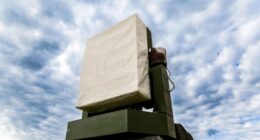


Counter-drone radars could take up less space without sacrificing coverage, with Teledyne FLIR Defense introducing a compact, mid-range system designed to detect and track aerial threats.
The “Ranger R10-3DX” is designed to provide continuous drone detection and tracking for military, security, and critical infrastructure missions.
It uses digital beamforming technology to deliver wide-area coverage and rapid threat detection while keeping power requirements low.
The radar detects small drones at ranges beyond 3 kilometers (1.9 miles), humans at 6 kilometers (3.7 miles), and light vehicles at more than 12 kilometers (7.4 miles).
A single radar panel covers a quarter of the horizon and can scan high into the sky. Four panels can be combined to provide 360-degree coverage.

“Small unmanned aircraft continue to present growing security challenges across military installations, airports, and other key infrastructure sites worldwide,” said Rob Tarantino, senior vice president of Surveillance at Teledyne FLIR Defense.
“The Ranger R10-3DX gives operators an affordable, compact, and highly capable radar solution that delivers the early warning and tracking performance needed to counter evolving drone threats.”
AI Helps Sort Drone Threats
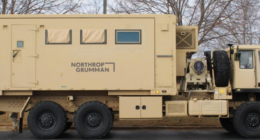
Built to withstand harsh conditions, the radar reportedly meets US military standards and can be used in fixed-site installations or on mobile platforms.
It can also integrate with electro-optical/infrared sensors and other mitigation systems, allowing operators to combine detection, tracking, and countermeasures in a layered air defense setup.
AI-powered target classification helps distinguish drones from aircraft, birds, and false threats, giving operators clearer information to assess potential dangers and respond faster.
The Ranger R10-3DX can also track multiple targets simultaneously, a capability that could prove useful when defending against groups of drones.
Teledyne FLIR Defense expects the radar to become available in early 2027.