Military AI developer Helsing is letting artificial intelligence manage interceptor missiles to defend allies from drone swarm attacks.
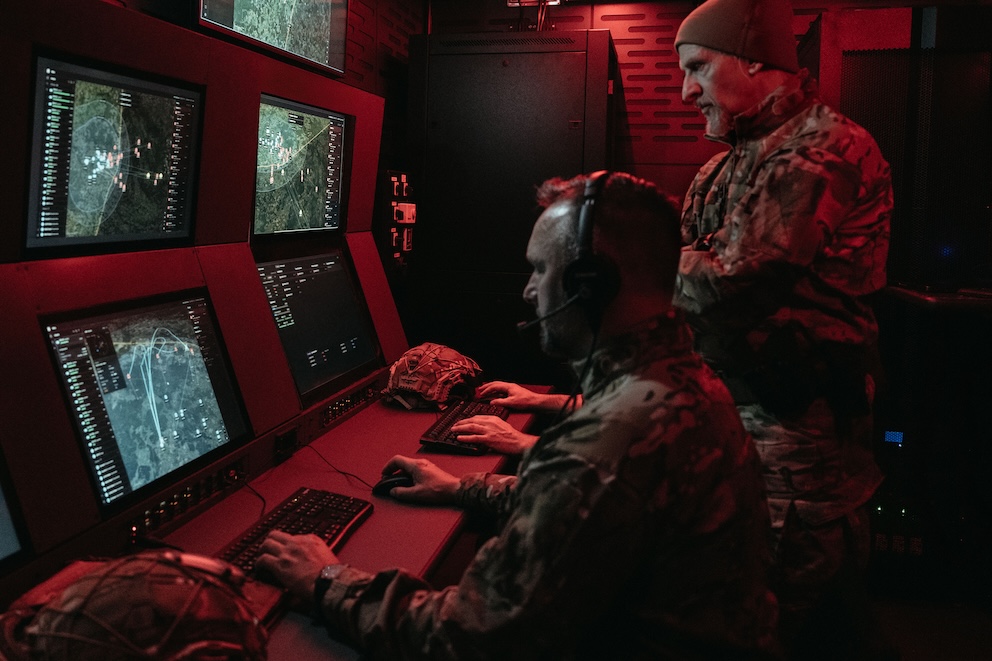
The German firm’s new “Contra” air defense system automates the detection and engagement of thousands of incoming threats by combining sensor data and weapons systems into a single air picture.
Powered by Helsing’s Altra command-and-control platform, Contra helps coordinate engagements while leaving human operators with the final say on target prioritization.
Helsing said the weapon reflects its approach to cross-domain defense, using AI and software to get more out of hardware that can be produced at scale.
“Contra ends the air defense dilemma: slow fair-weather drones, or million-euro missiles fired at cheap, mass-produced targets,” Helsing President and Co-founder Niklas Köhler said.
“With jet and rocket propulsion, a low-cost all-weather radar seeker, and two independent European supply chains, they deliver autonomous fire superiority up to [10 kilometers (6 miles)] high – affordable and at industrial scale.”
Outpacing the Fastest Threats
Alongside Contra, Helsing unveiled two interceptor missiles, the “AD-1 Inferno” and “AD-2 Ambush,” which the company said are designed to counter even the fastest drones and cruise missiles.
AD-1 is a jet-powered interceptor designed for aerial loitering, swarming, and repeated engagements. AD-2 uses a solid rocket motor for rapid interception.
The AD-2 can reach Mach 2.5, or around 3,062 kilometers (1,903 miles) per hour, and has a range of 20 kilometers (12 miles).
Both missiles use Contra’s ground-based radar stations for guidance and carry onboard seekers for all-weather operations.
The interceptors are launched from containers, and Helsing says they will be manufactured at its Resilience factories to reduce per-unit costs compared with conventional interceptor systems.
Although Contra was designed to work with the AD-1 and AD-2, it can also be reconfigured to support third-party systems, including lasers, guns, and nets, within days.