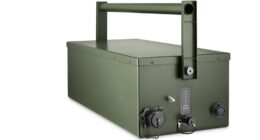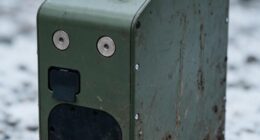


Germany’s Mehler Protection is leveling up vehicle protection with a new counter-unmanned aerial system (C-UAS) designed to neutralize threats as they approach.
Built to counter first-person view drones, kamikaze drones, and loitering munitions, SCILT integrates effector modules, onboard sensors, and fire-control logic directly into the vehicle.
The effector module can fire multiple ammunition types, including standard shotgun rounds, rubber bullets, hardened core loads, tungsten fragments, and armor-piercing shells.

For sensing and targeting, the system combines electro-optical and short-range surveillance tools, helping operators detect threats quickly and make faster decisions during close engagements.
How it Handles Threats
SCILT uses directional coverage zones that crews can activate or deactivate depending on vehicle positioning and formation.
It also follows a graduated alert process, moving from initial detection to threat approach, and finally to a trigger-ready status as a drone enters engagement range.
A human operator controls firing decisions, with further automation planned as the system matures.

Path to Operational Readiness
Mehler Protection reportedly spent 18 months developing SCILT.
Testing included 48 trials assessing ballistic performance, heat tolerance, firing reliability, and how projectiles spread after detonation.
The system, revealed at Enforce Tac 2026, is slated for release in summer 2026.