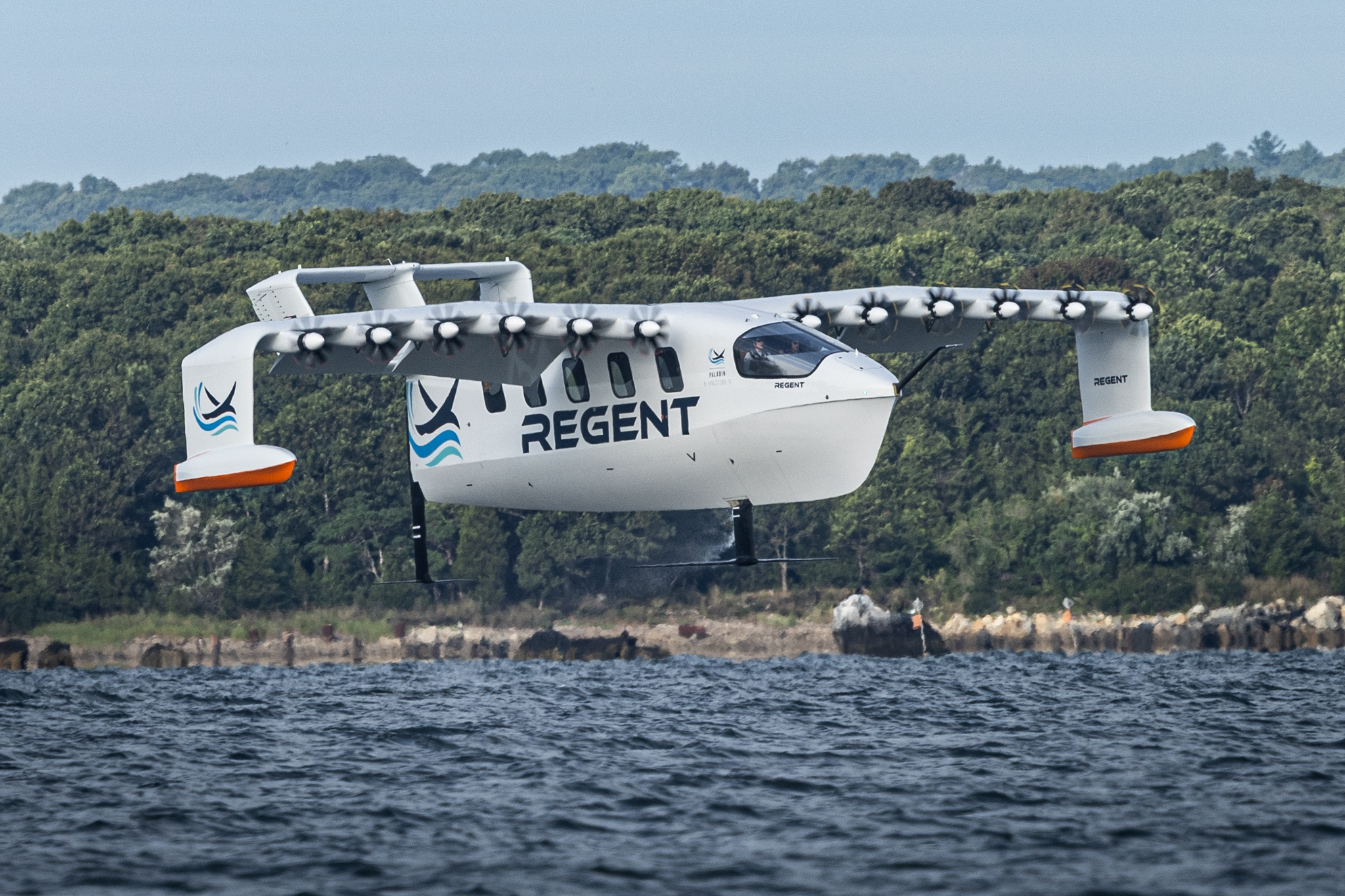
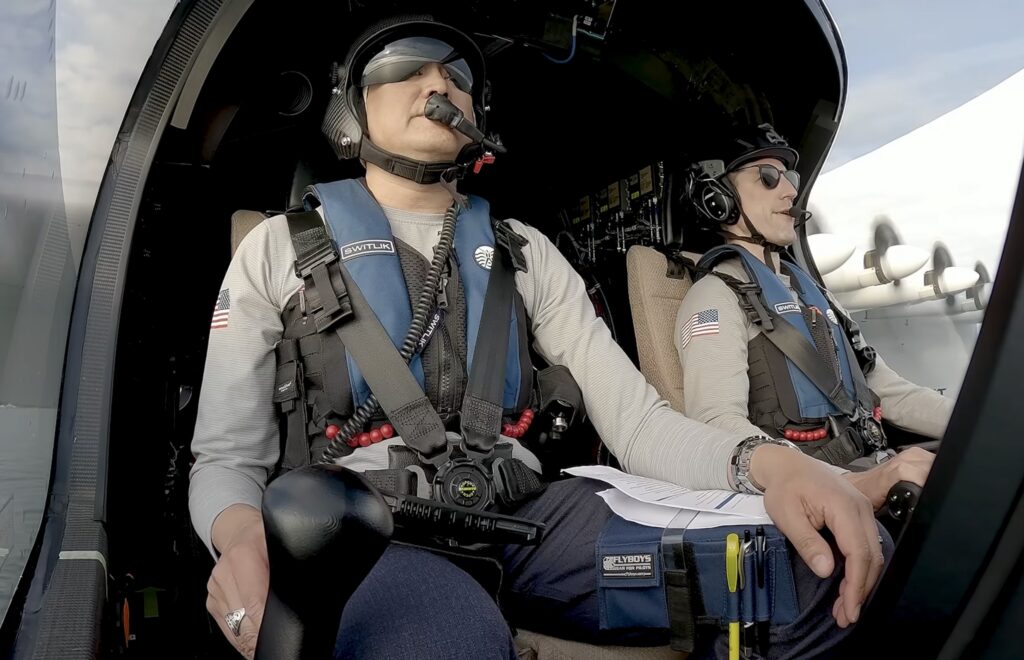
REGENT has flown its Viceroy Seaglider prototype with people on board for the first time, marking what the company described as the “world’s first” crewed flight of a “flying boat.”
During the test, the platform carried two captains for 1,956 feet (596 meters), flying 33 feet (10 meters) above the water for 30 seconds.
Conducted over Narragansett Bay in Rhode Island, the flight validated key technologies and moved the program into its final phase of sea trials.
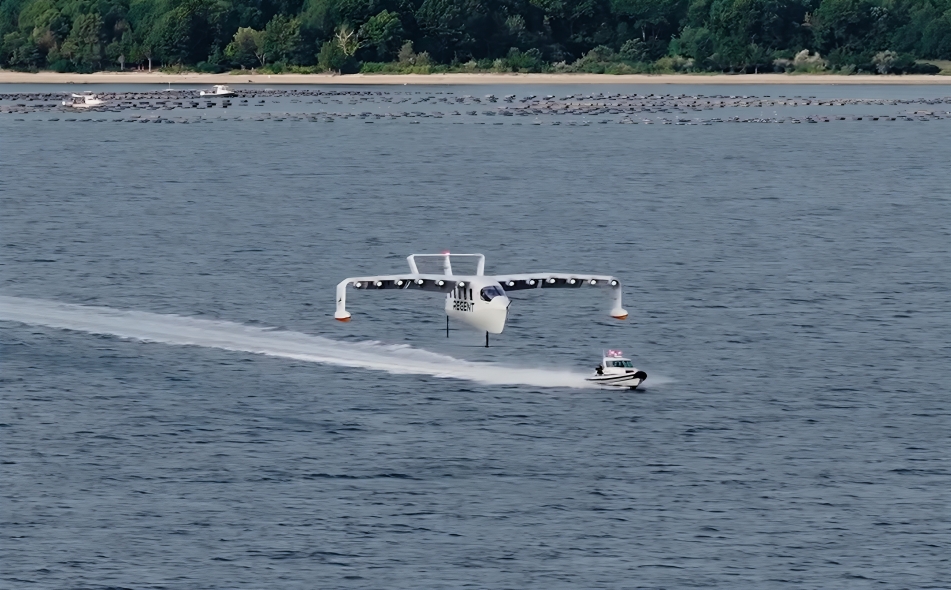
REGENT had previously increased the vessel’s hydrofoiling speed in preparation for the flight as part of a 2026 test campaign combining on-water trials with simulation-based development.
The work is intended to refine the vehicle’s performance, reduce operational risks, and move it closer to commercial and defense use.
“Completing this flight test validates years of rigorous engineering and operational work and gives us the confidence to move into full-rate production,” said Mike Klinker, co-founder and chief technology officer of REGENT.
“We showed today that flying a Seaglider is every bit as smooth and safe as we designed it to be. I can’t wait to get onboard and to share the experience with others as we make our vision for the future of maritime mobility a reality.”
Viceroy Unwrapped
The Viceroy Seaglider is an electric hybrid that combines the characteristics of a boat and an aircraft.
It travels from dock to dock as a vessel, rises onto hydrofoils as it gains speed, and then flies above the water using the aerodynamic benefits of ground effect.
The vehicle measures 55 feet (16.8 meters) long and has a wingspan of 65 feet (19.8 meters).
It is designed to travel up to 160 nautical miles (300 kilometers/184 miles) and cruise at 160 knots (300 kilometers/184 miles per hour).
The cargo configuration can carry up to 3,500 pounds (1,600 kilograms), while the passenger version can accommodate 12 passengers and two crew members.
According to REGENT, its all-electric powertrain produces zero operational emissions and 30 decibels less noise than conventional aircraft or helicopters.