
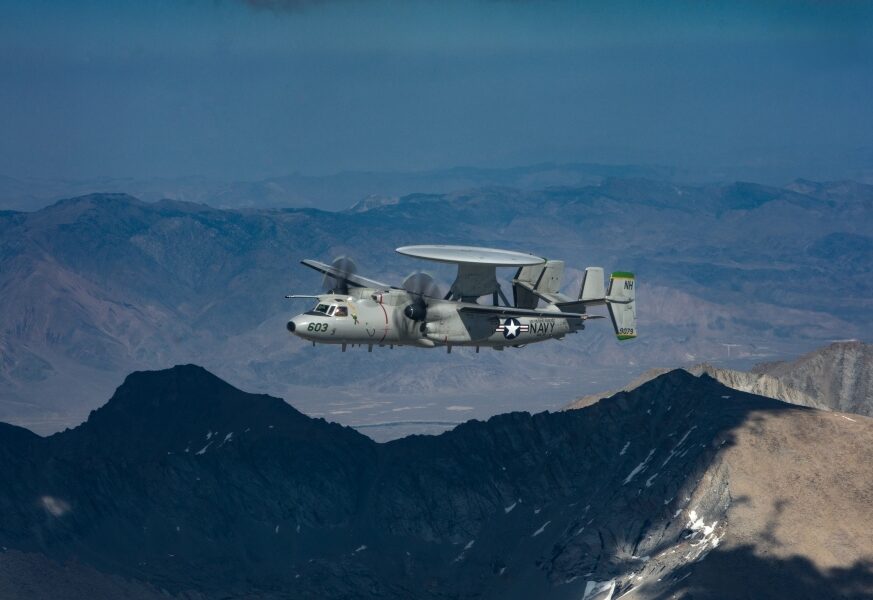
A modernization push for the E-2D Advanced Hawkeye is bringing augmented reality (AR), virtual reality (VR), AI, and machine learning to its maintenance and training ecosystem, aiming to speed up repairs and improve technician performance across the fleet.
Armor sits at the core of the effort, projecting animated, step-by-step maintenance instructions directly onto aircraft components through tablets or AR headsets.
It gives maintainers a digital “x-ray” view of Hawkeye while reducing training and labor time, allowing the platform to return to operations in hours instead of weeks.
Also included is a VR-based training system that places teams inside a 360-degree digital environment where they can interact with hard-to-access components that are expensive to replicate physically.
According to Northrop Grumman, the technology can improve task performance by up to 75 percent while significantly boosting technician confidence during real-world repairs.
Completing the lineup is the Learning Intelligence Tools Ecosystem, a machine learning system designed to analyze maintenance data and identify the root causes of system issues.
The tool can reportedly reduce maintenance rework by 67 percent in radar pressurization and cooling systems, cutting weeks of testing and helping return the aircraft to service faster.
Platform Overview: E-2D Hawkeye
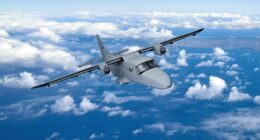
The E-2D Advanced Hawkeye is a carrier-based airborne early warning and command-and-control aircraft designed to expand fleet situational awareness.
With a maximum takeoff weight of 53,000 pounds (23,850 kilograms), the aircraft measures 17.5 meters (57.6 feet) in length and features a wingspan of 28 meters (80.7 feet).
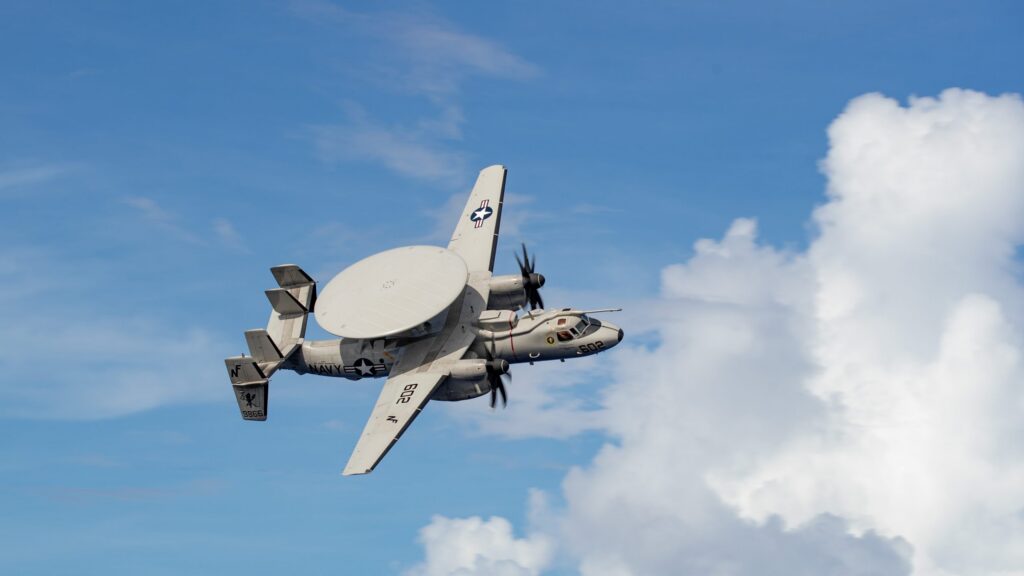
It can fly at speeds exceeding 300 knots (345 miles/552 kilometers per hour) and operate at altitudes up to 30,000 feet (9,100 meters).
The Hawkeye family includes the E-2A, E-2B, and E-2C variants, while the E-2D operates with a crew of five consisting of two pilots and three mission operators.
The aircraft is capable of detecting aircraft, missiles, and surface vessels while coordinating real-time mission responses across the fleet.