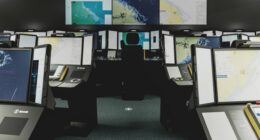
In a recent live demonstration with the US Marine Corps, Ultra I&C ran a fully digital sensor-to-effector kill chain, connecting sensors directly to actionable engagement decisions.
The exercise leveraged artificial intelligence and machine learning to automate routine tasks, while humans stayed in the loop for final decisions.
During the operational demo, a representative MQ-27 aircraft carrying a signals intelligence payload sent data to Ultra I&C’s Rain analytics platform, which detected and classified a vessel as a potential threat.

That threat data flowed into the Advanced Decision Support Interface, giving operators a shared picture of the battlespace and presenting commanders with actionable response options in real time.
The demo reportedly delivered faster kill chain execution, improved situational awareness, and reduced risk for warfighters at the tactical edge.
Part of Modernization
The demo was held under a Cooperative Research and Development Agreement (CRADA) with the Marine Corps Tactical Systems Support Activity.
It supports the service’s Force Design modernization efforts, marking an initial step toward integrating autonomous, AI-assisted command-and-control capabilities into US Marine Corps operations.

“No single company solves every challenge the Department of Defense faces. It takes collaboration,” said Mladen Brkic, president of Mission Solutions at Ultra I&C.
“Ultra I&C’s work in this CRADA is self-funded because we believe out-innovating our adversaries requires that level of commitment.”