
The Western Pacific is set to gain a new layer of air and missile defense coordination, as Anduril develops an integrated command-and-control “battle manager” for the region.
Under a contract with the US Army, the Californian defense company is tasked with developing a prototype system designed to support regional deterrence and strengthen allied defense capabilities across the Indo-Pacific.
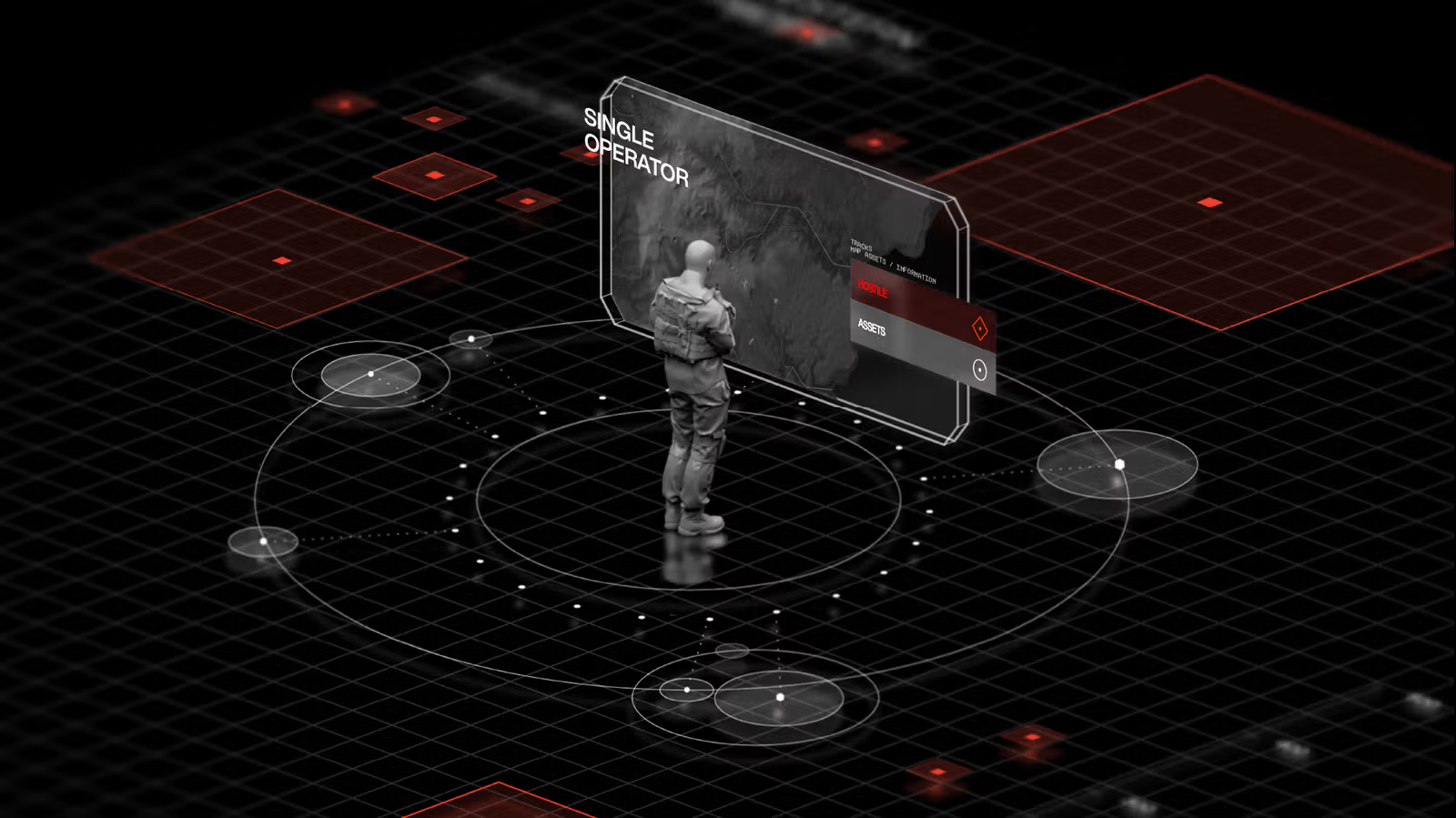
Central to the concept is Anduril’s AI-powered Lattice software, which will fuse data from existing defense systems, including disconnected sensors and effectors, into a unified operational picture.

The aim is to turn large volumes of tactical data into a single, real-time view of the battlespace, forming the backbone of a wider battle management system.
“Anduril’s centralized battle management solution in the Western Pacific equips our joint forces with the technology needed for effective deterrence and defense in an increasingly dynamic threat environment,” the company stated.
Inside the AI Command Layer
Lattice is designed to automatically task sensors in real time, directing them toward points of interest and helping determine responses to inbound threats such as drones or missiles.
It evaluates available sensors, assesses their capabilities within time constraints, assigns them accordingly, and can adjust those allocations as operations evolve.
The system also incorporates simulation tools that model battlefield scenarios, allowing commanders to test and validate operations in a virtual environment before real-world deployment.
Together, these capabilities underpin a centralized battle manager aimed at handling “the most complex kill chains.”
Why the Western Pacific
The Western Pacific remains a critical corridor for global trade and supply chains, but also a region marked by persistent geopolitical tensions.
Those conditions are driving demand for faster, more integrated defense systems capable of responding to emerging threats in real time.
While existing Indo-Pacific defenses already operate continuously across the region, an AI-enabled command layer that connects sensors and systems across multiple domains could further strengthen deterrence and operational coordination.