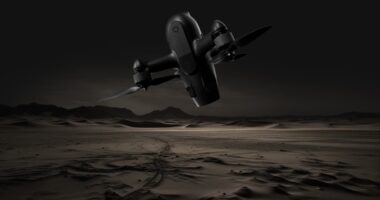

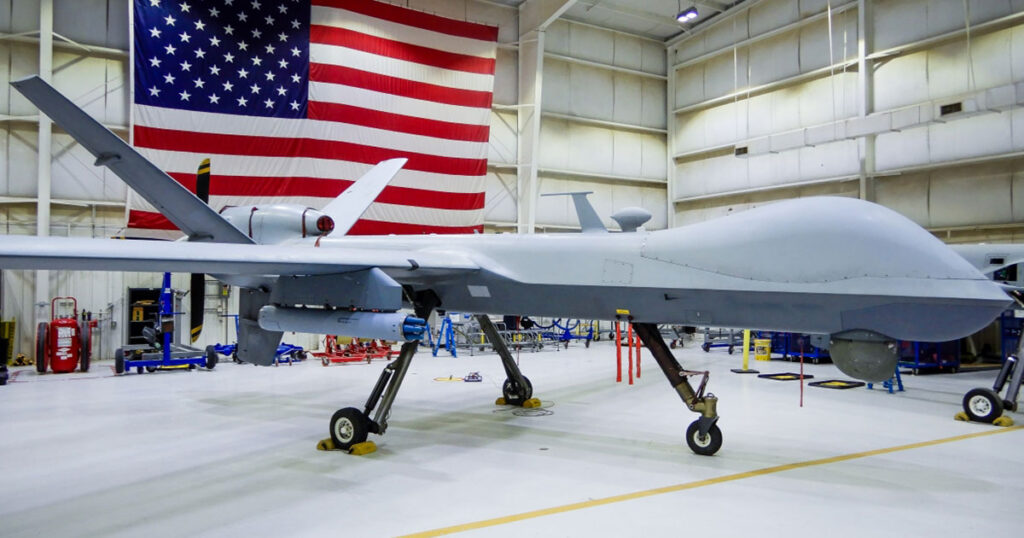
The MQ-9A Reaper’s proposed successor has finally stepped into view, with General Atomics Aeronautical Systems, Inc. (GA-ASI) revealing a lower-cost, highly autonomous aircraft called “Wildfire.”
Designed from scratch, the new drone combines proven features from across the company’s unmanned aerial systems portfolio with cheaper components and a more modular architecture.
The highly autonomous aircraft is intended for collaborative crewed-uncrewed operations and can carry four Joint Strike Missiles or a mix of sensors and other tactical payloads.
Its advanced autonomy suite could allow operators to coordinate dozens of networked aircraft simultaneously using low-Earth-orbit satellite communications.
GA-ASI proposed Wildfire for the US Air Force’s Massed Modular Aircraft competition, managed by the Defense Innovation Unit (DIU). The company claims the design exceeds all of the program’s requirements.
The aircraft is expected to fly more than 8,000 nautical miles (14,816 kilometers/9,206 miles) while carrying two long-range anti-ship missiles.
Built for Scale
Wildfire is being positioned for a range of military and civilian roles, from overwhelming enemy defenses to transporting heavy commercial cargo.
It could also serve as an airborne intelligence and surveillance platform. GA-ASI describes the concept as “a high-volume, lower-cost airplane that does a few things really well.”
The company plans to use its existing production lines to deliver Wildfire to US forces ahead of the DIU’s 2031 deadline.
According to GA-ASI, this approach could allow it to produce twice as many Wildfire aircraft within the same timeframe as its earlier drone programs.