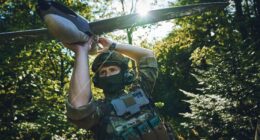
Ukraine is exploring a new set of eyes for its drones, aiming to take them beyond GPS navigation.
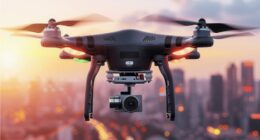
The Optical System of Coordinates with Automatic Relocalization, or OSCAR, uses onboard cameras to match live imagery with mapped landmarks, allowing a drone to determine its position without relying on satellite signals.
Once processed, the data is fed directly to the autopilot, enabling navigation through contested and degraded flight environments.

Ukrainian maker Twist Robotics said the system is designed to resist spoofing and jamming attacks that have become frequent in the Russia-Ukraine conflict.
It can also reportedly maintain positional accuracy within roughly 20 meters (66 feet) even during foggy conditions and across day and night operations.
Proving OSCAR
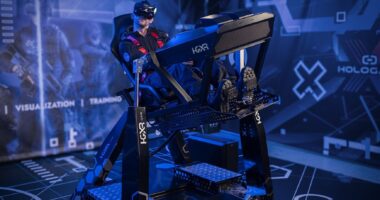
During early development, Twist Robotics leveraged artificial intelligence and its in-house Obrii simulator to test OSCAR across a range of combat scenarios.
The approach allowed engineers to evaluate how the system would behave once installed aboard drones before live integration.
Over a 24-month development period, the company refined OSCAR across multiple platforms, accumulating more than 500,000 kilometers (310,686 miles) of testing and operational data.