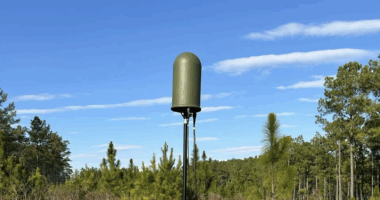


As small first-person view (FPV) drones increasingly dominate modern battlefields, US firm Mara is introducing a new integrated counter-unmanned aerial system (C-UAS) designed to defeat them.
Called Spike, the system comprises two modular components, the Spotter and the Seeker, which can operate independently or as a team.
The Spotter handles detection and targeting, combining visual and acoustic sensors, radar, and AI to identify objects in all weather, day or night.
The 250-gram (0.55-pound) Seeker acts as the kinetic interceptor, reaching speeds of up to 200 kilometers (124 miles) per hour and using onboard guidance to pursue its target.
Once the Spotter detects a threat, it can automatically send a launch command to the Seeker. A human operator can retain control over the engagement when required.
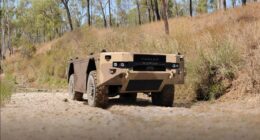
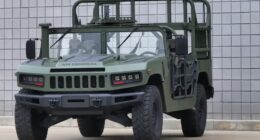
Spike can be deployed in several configurations, ranging from a man-portable version for dismounted troops to vehicle-mounted systems that protect moving formations.

“Small drones changed the battlefield because they distributed the cost and capability of precise attack,” said Daniel Kofman, co-founder and chief executive officer of Mara.
“Most defenses still concentrate on both replacement cost and line of fire. Spike instead creates a distributed mesh of small, cheap nodes that can each aim and shoot in multiple directions at once.”
Put to the Test
Spike’s two components have undergone live field testing, including Seeker interceptions guided by US Army software during an exercise in Texas.
In another US Army exercise in Europe, the Spotter operated autonomously from an armored vehicle and transmitted detection data to the service’s command software.
Testing with a US Special Operations Unit also saw Spike autonomously complete the engagement sequence, from Spotter’s initial detection to the launch of the Seeker interceptor.
Scaling Up
Mara has secured $7 million in pre-seed funding led by Khosla Ventures to advance Spike ahead of a planned production scale-up in 2027.
Once fully fielded, the C-UAS could establish defensive perimeters spanning several kilometers around military bases, front-line positions, and power plants.
Through late 2026, the company is prioritizing deliveries of the vehicle-mounted Spike variant to customers.