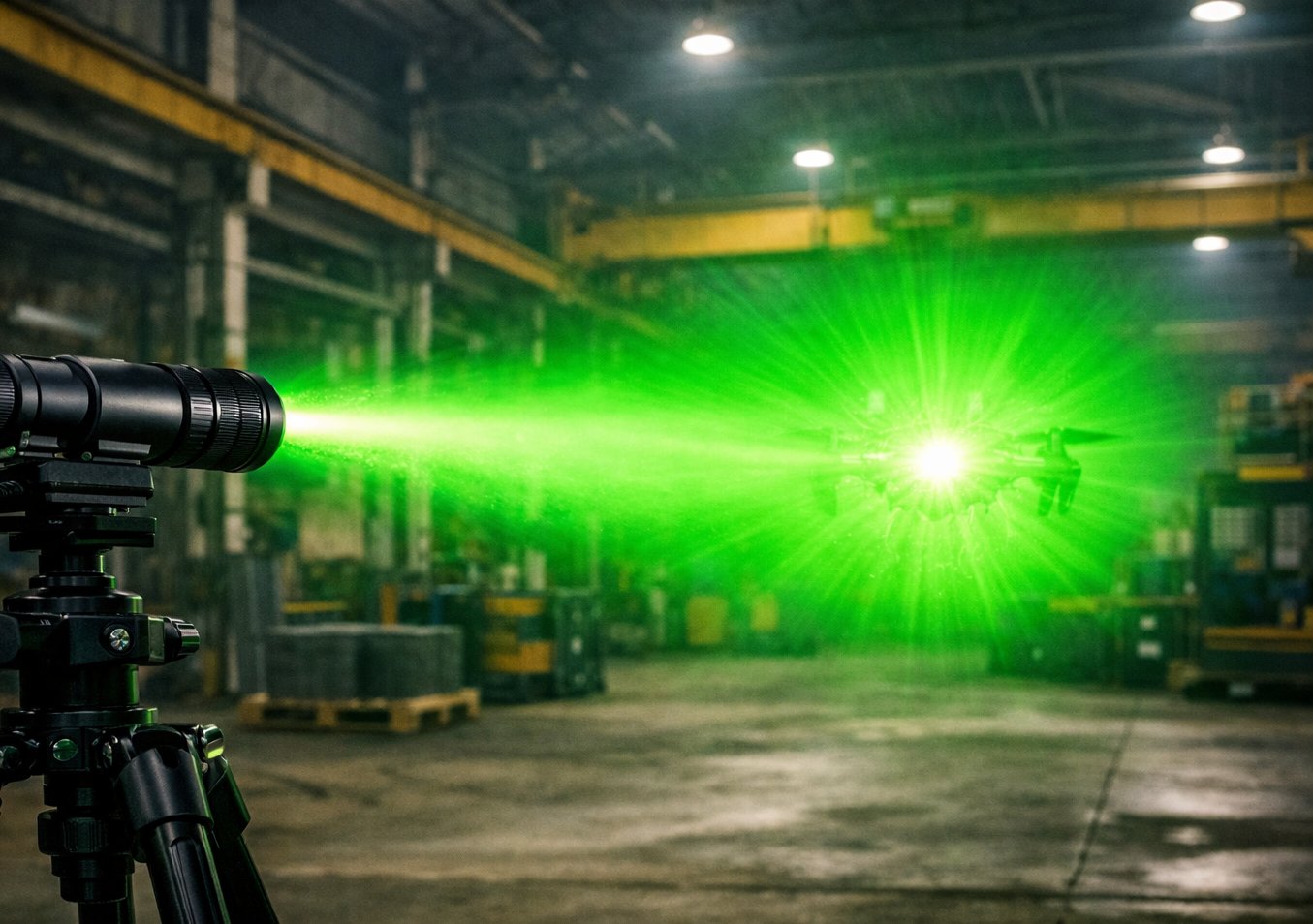
US-based firm Nuburu has taken its laser dazzler technology into testing as a new non-kinetic option for counter-unmanned aerial system (C-UAS) missions.
Conducted at the facilities of Italian company Tekne S.p.A., the trials evaluated whether the laser could disrupt drones’ electro-optical sensors and degrade their ability to capture visual data.
In one scenario, a drone was tasked with locating an operator, but the individual was able to move within 20 meters (66 feet) of the aircraft without being detected.

Another trial involved two drones and tested both continuous-wave and pulsed laser modes while keeping power output within standard safety limits.
Additional evaluations increased the laser’s power to as much as five times the regulatory limit to assess its maximum performance.
At ranges of up to 100 meters (328 feet), the laser dazzler reportedly delivered consistent sensor disruption across all test configurations.
“Technically, the campaign confirmed sensor… denial across multiple unmanned aerial vehicle configurations under controlled conditions,” said Dario Barisoni, chief executive officer of Nuburu.
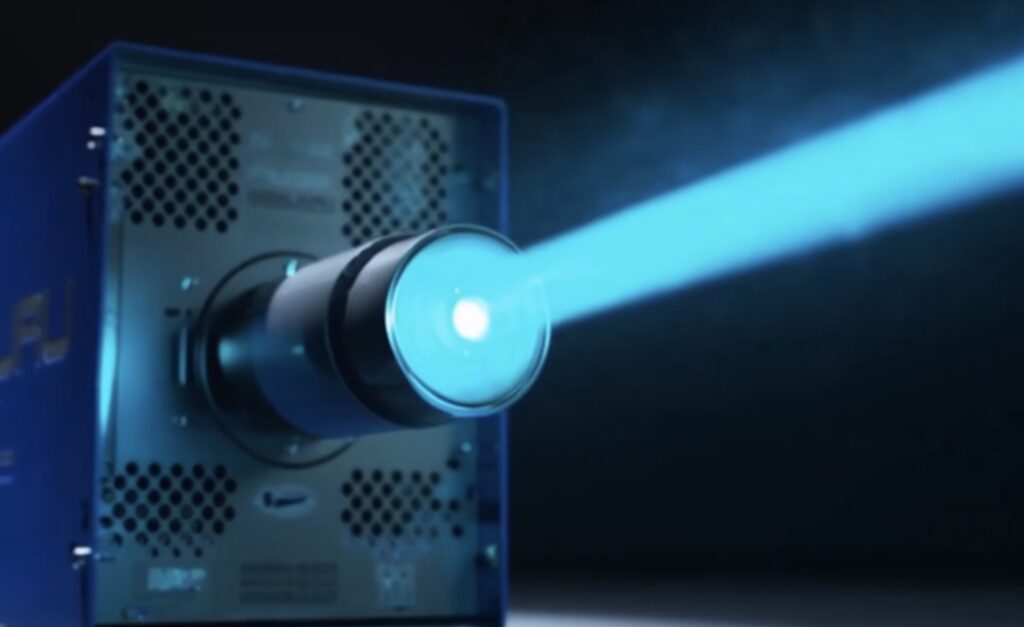
“The next step is engineering discipline: configuration optimization, safety review, range modeling, platform integration and repeatable qualification gates for day- and night-time optical-defense mission packages.”
Next Steps
Data collected from the tests will be used to shape future laser dazzler designs, including a system that combines green, blue, and infrared lasers into a single platform.
Nuburu said the technology could also be integrated into Tekne’s tactical platforms and future mission systems under the Nuburu Defense Italian Plan, providing day- and night-time protection across land, maritime, and fixed-site environments.
Following the trials, the two companies established a joint engineering team to refine the system’s design and prepare for future validation campaigns.