South Korea is prepping smarter tech to boost protection in the skies.
Hanwha Systems, one of Seoul’s leading defense companies, has signed a memorandum of understanding (MoU) with Northrop Grumman to co-develop next-generation integrated air and missile defense systems.
The collaboration pairs Hanwha’s experience from Korea’s KAMDOC and ADC2A battle management platforms with Northrop’s renowned Integrated Battle Command System (IBCS), already fielded by the US Army.
Together, they aim to develop advanced solutions tailored to South Korea’s evolving defense needs.

What IBCS Brings to the Table
IBCS fuses different radars and interceptors across land, sea, and air to communicate and respond as one.
It chooses the best available weapon for any incoming threat, from drones to ballistic missiles, reducing response speed and boosting effectiveness.
The system is drawing attention from NATO members and regional partners looking to modernize their air defense strategies.
Hanwha’s Radar Edge
Hanwha is already known for its multi-function radars, used in platforms like the Cheongung-II medium-range surface-to-air missile.
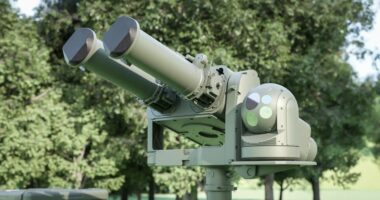
More recently, the company was tapped to develop the radar for the country’s Low Altitude Missile Defense (LAMD) system, also known as the “Korean Iron Dome.”

A Well-Timed Alliance
The partnership arrives at a time when aerial threats are evolving fast.
“This MoU with Hanwha demonstrates our strong desire to collaborate with Korean industry … to provide innovative and cost-effective air and missile defense solutions that enhance Korean homeland defense,” said Kenn Todorov, VP and general manager of command and control and weapons integration at Northrop Grumman.
For Seoul, the deal strengthens both its air defenses and its strategic position in the global defense tech market.
“Our partnership reflects our ambition to lead the development of next-generation weapon systems and strengthen our position in the global market,” noted Park Sung-kyun, VP and business director of the defense electronics division at Hanwha Systems.